

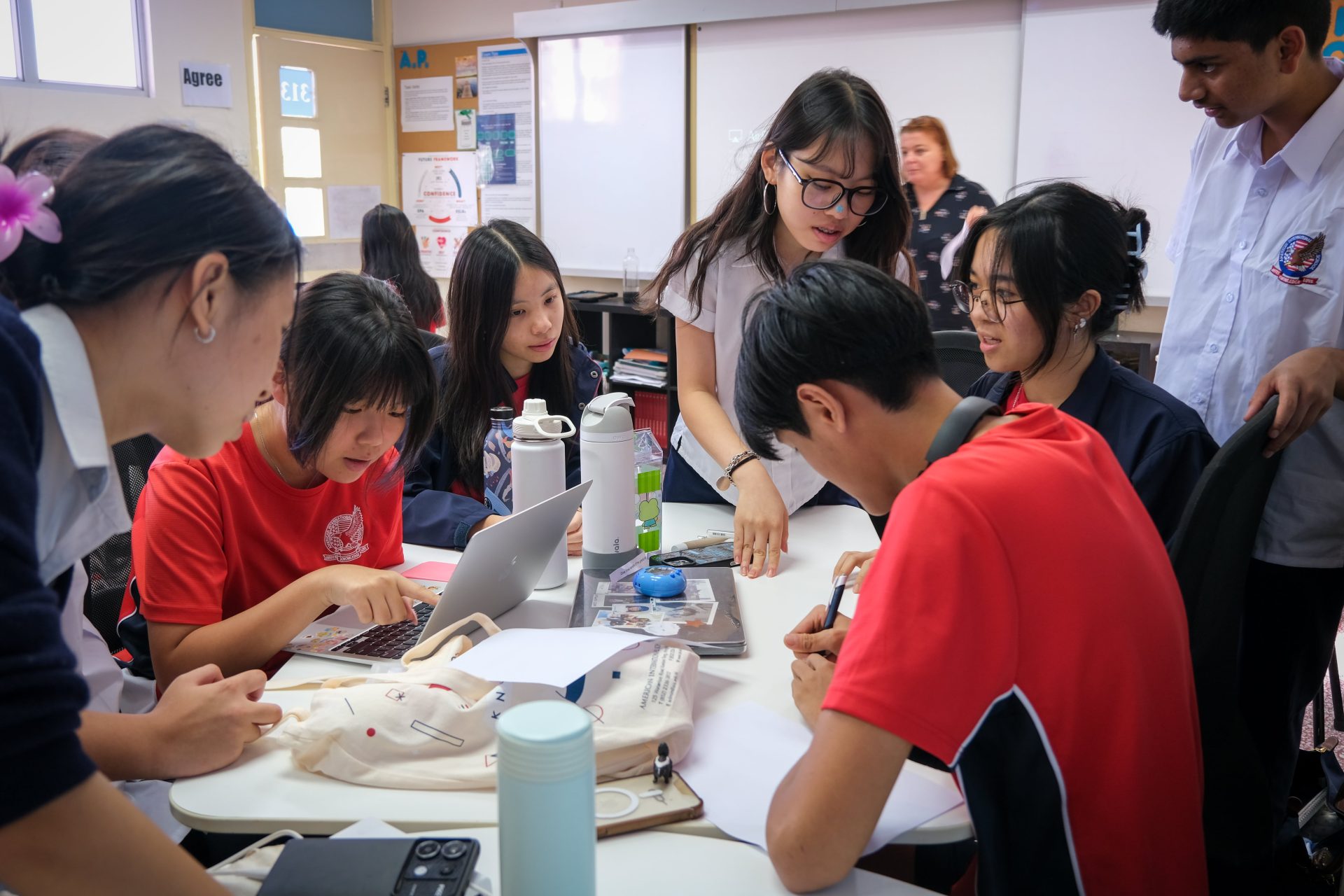
AIS High School Humanities Delivers Masterclass in Keeping Students at the Center of Learning in the Age of AI
At the American International School, innovation in education goes hand in hand with a commitment to student ownership of learning. This year, AIS High School World History teacher, Ms. Lisa Rose-Jeffreys, has introduced AI into her AP World History classroom in a way that empowers students rather than replaces them.
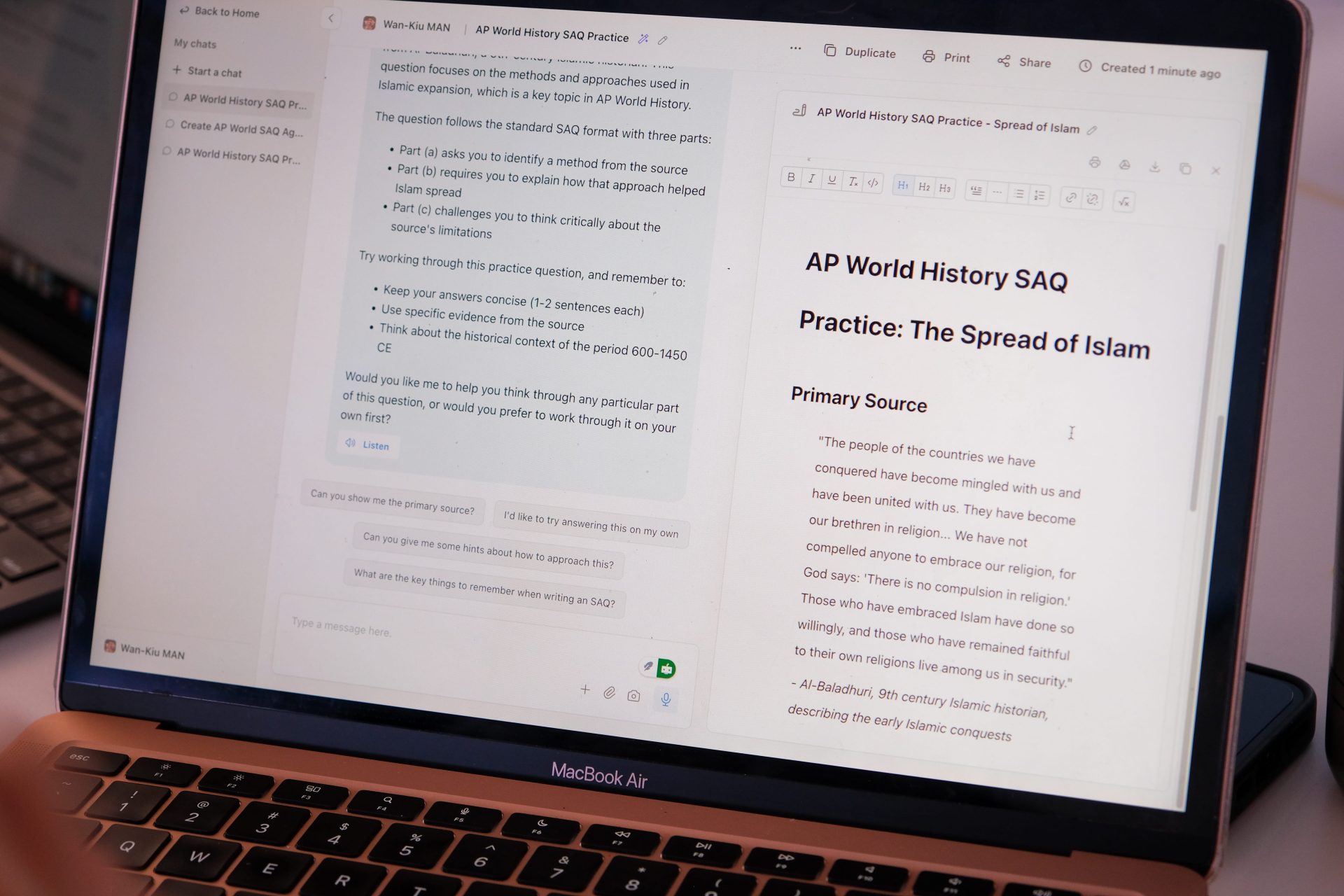
From day one, Ms. Rose-Jeffreys set the tone: AI is here to guide, not to give answers. Using a custom-built “tutor-bot,” she has created a generative study aid that helps students think critically, ask better questions, and connect big-picture historical concepts with specific details. The bot is carefully curated with knowledge of the AP World History syllabus and strategies for structuring answers on the AP exam. However, the responsibility for generating ideas, retaining knowledge, and applying understanding remains with the students themselves.
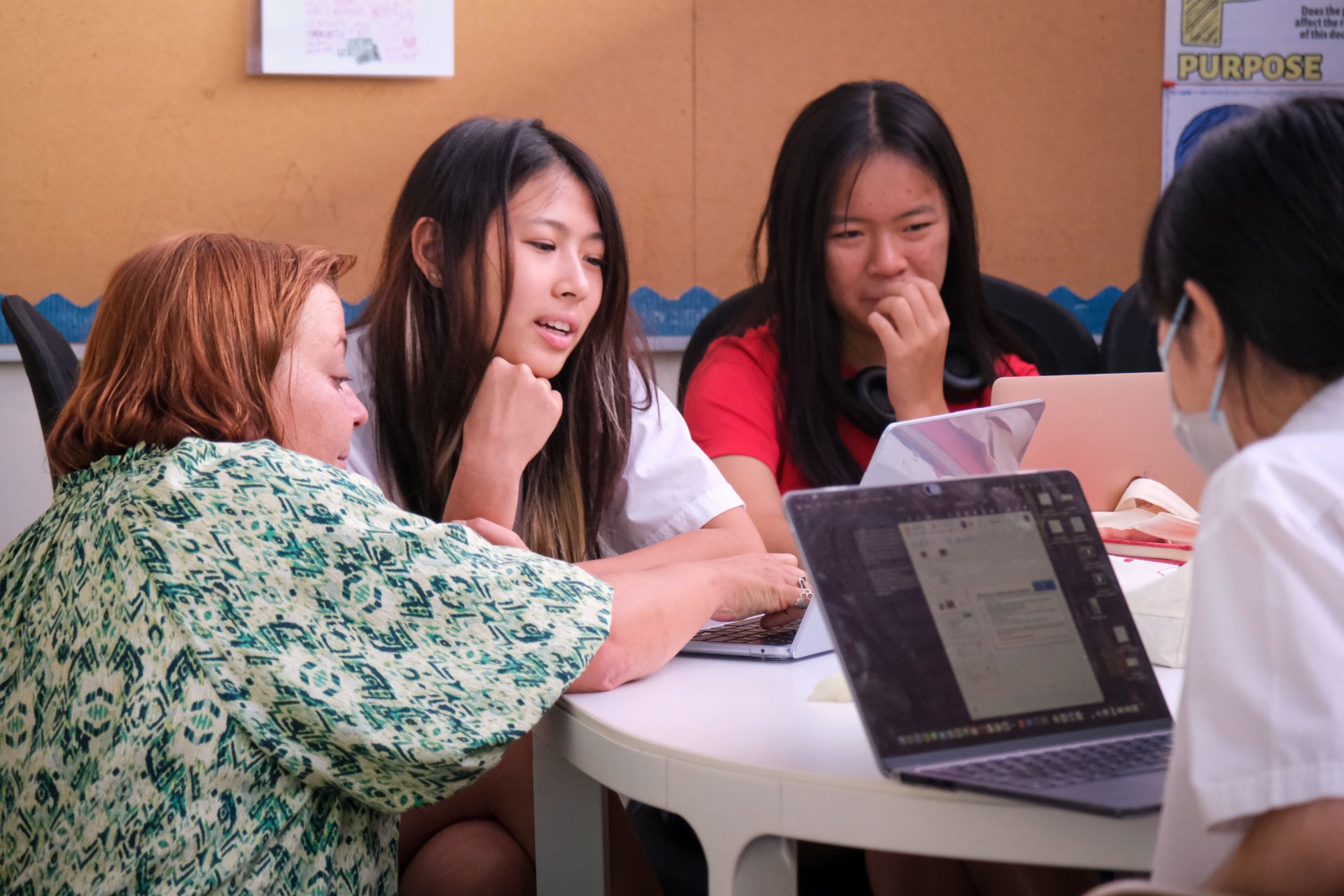
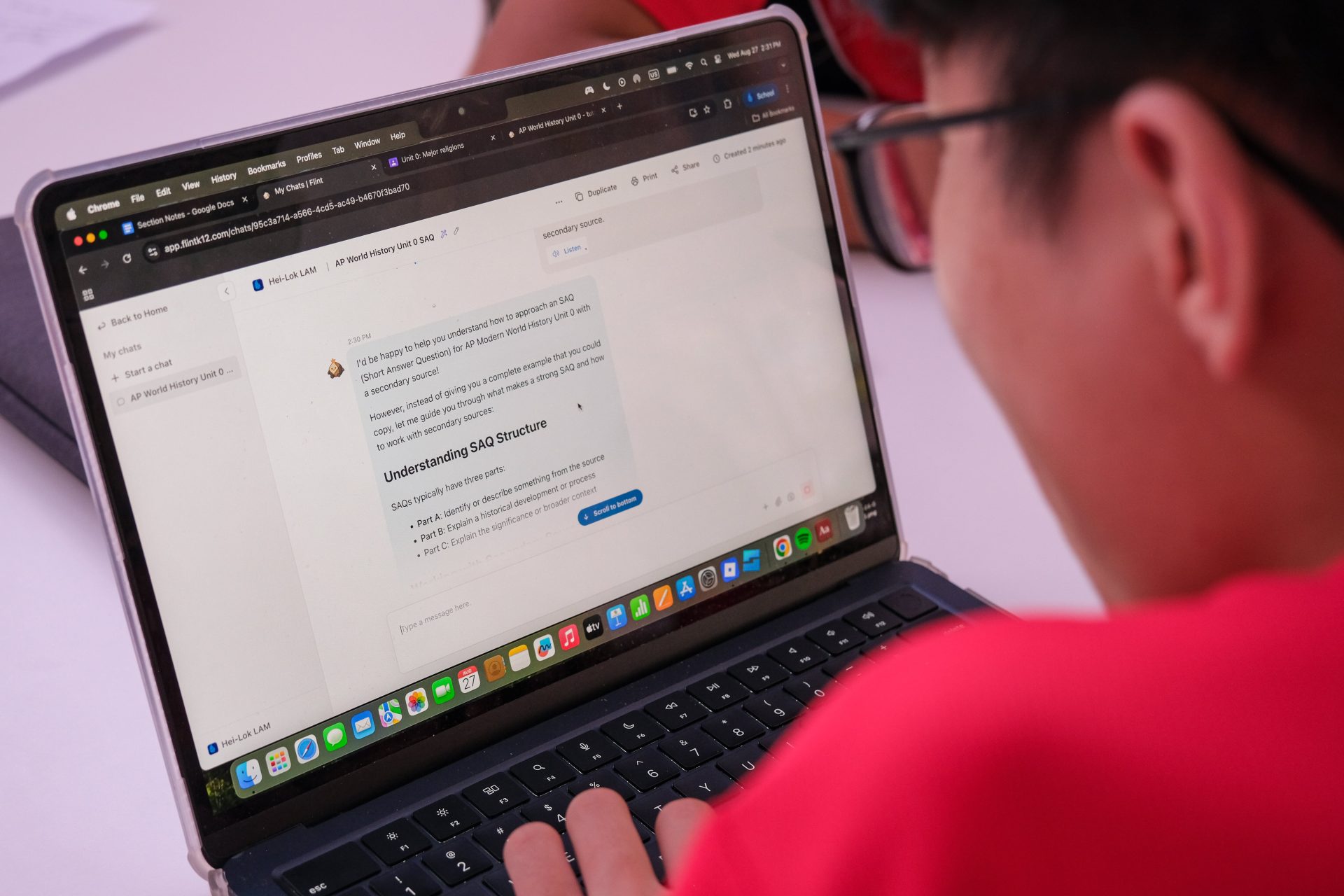
The tutor-bot works by prompting students to reflect on their prior learning before diving deeper into specific content. Instead of handing students information, it challenges them to articulate what they already know and then guides them to expand that knowledge through their own research. As Ms. Rose-Jeffreys explains, “It’s important to place an emphasis on the development of historical knowledge from the foundations of the course so that students know what they know at each step of the process.”
A recent classroom activity brought this approach to life. Students were divided into groups and tasked with mastering the first unit of AP World History using the AI tutor-bot for guidance. To make the process engaging, Ms. Rose-Jeffreys organized a race between groups: each team studied the topics with AI support, then explained their learning to their peers from memory, focusing on clarity and connection. This peer-to-peer teaching required students to recall information without relying on notes or searches, reinforcing their confidence in what they knew. Ms. Rose-Jeffreys emphasized that she wants students to see early on that they are capable of retaining and sharing large amounts of information independently. By framing the activity as a competition, students felt a deeper sense of responsibility and belonging, since each member’s success was tied to their group’s performance. As Ms. Rose-Jeffreys reflected, “Students were telling their own story of the history they had learned—with some guidance from AI. The AI is used to teach them to teach others.”
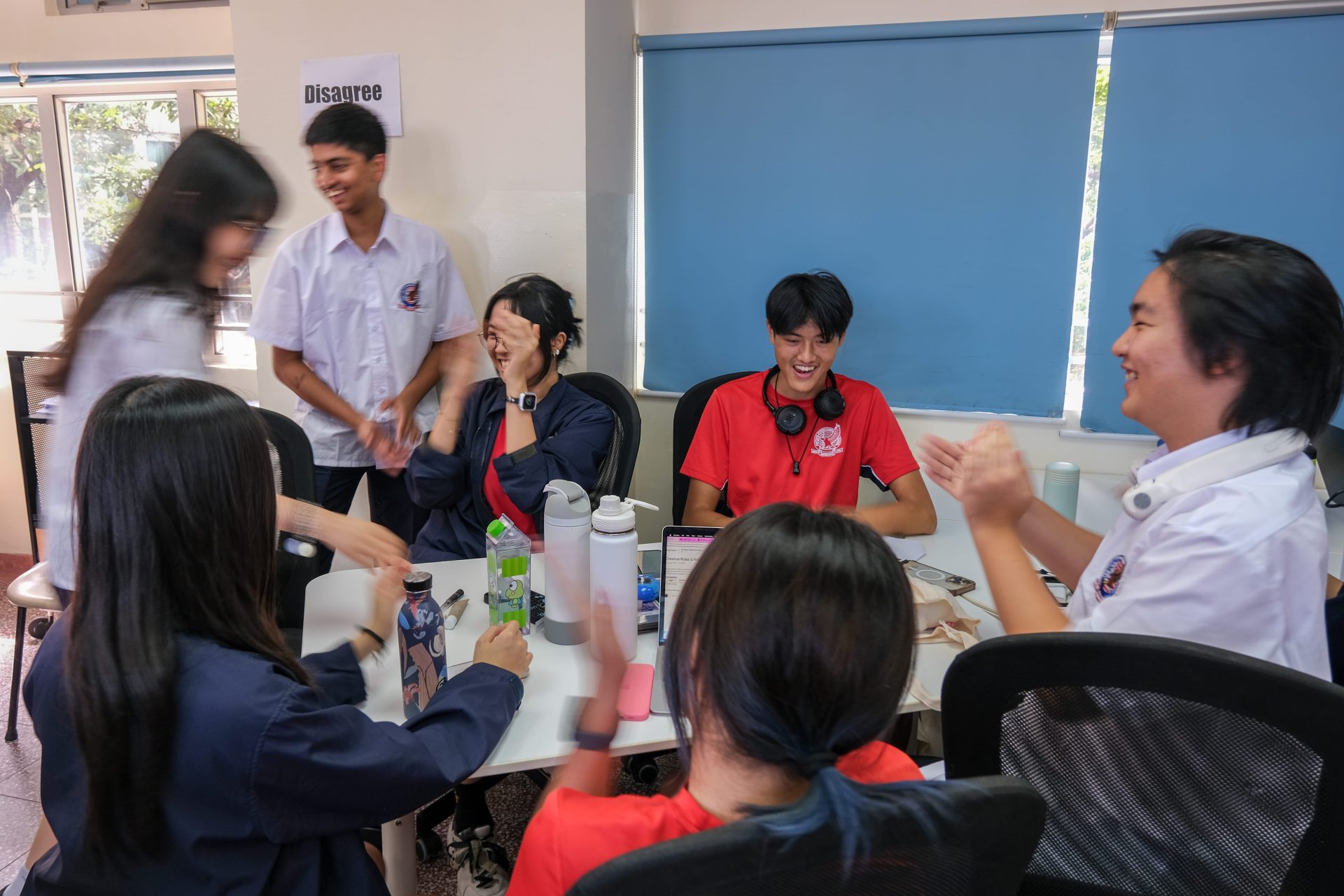
The benefits of this approach extend beyond historical knowledge. Students are also learning how to use AI both ethically and effectively. For example, when students ask a straightforward question, the AI tutor-bot responds with its own line of questioning to assess prior knowledge before guiding them through the topic in a way tailored to their learning, rather than offering a one-size-fits-all answer. While some students initially struggled with crafting effective prompts, Ms. Rose-Jeffreys observed that persistence and teacher support quickly transformed early frustration into moments of genuine discovery.
Does Ms. Rose-Jeffreys think AI will replace teachers?
Absolutely not. She encourages students to use the chatbot as a resource—even to get feedback on practice essays—but always reminds them of its limitations, including potential bias and error. “Students should not see AI as a replacement for the teacher, but instead as a partner. They still need to bring their work to me for feedback, because human interaction is irreplaceable,” she explained. Grade 10 student Chun Ka C. echoed this perspective, sharing that while there were some initial issues, the tool has already proven useful. “The bot gives very good examples through short-answer questions and lots of feedback on the answers I write,” he said. At the same time, he acknowledged its limits: “Sometimes it’s too supportive and not as detailed as the teacher’s feedback—but I think it will improve as the bots are trained more.”
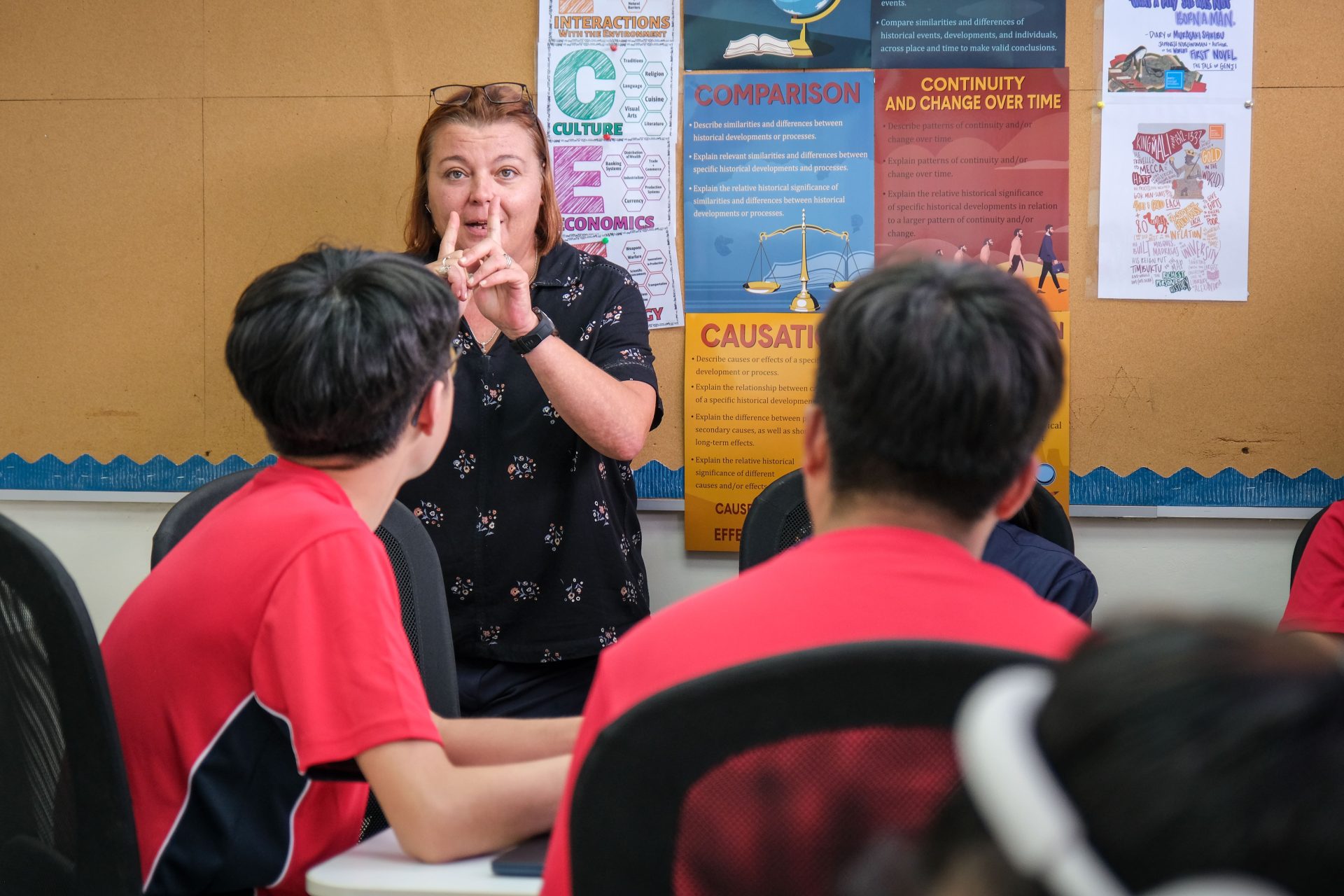
Far from making the teacher’s role smaller, the integration of AI has made the classroom more dynamic. Freed from answering every basic content question, Ms. Rose-Jeffreys is busier than ever engaging in rich discussions, guiding research, and deepening understanding. Grade 12 student Cherrie W. noted the unique benefits of the AI tutor-bot compared to other tools. “It’s better than DeepSeek because it keeps asking questions and doesn’t let you miss the important concepts,” she explained. “Other platforms sometimes give you more irrelevant information.” Still, she suggested one area for improvement: “It would be better if it was more transparent about its sources.”
In a world where AI is becoming more present in everyday life, AIS is ensuring that students remain at the center of the learning process. With the support of innovative teachers like Ms. Rose-Jeffreys, AIS students are gaining not only historical knowledge but also the confidence, creativity, and ethical awareness to thrive in the age of AI.
As Grade 12 student Cherrie W’s previous comment illustrates, used strategically, AI is also supporting the development of important critical thinking skills.